
Reviewed by Dr. Chau McGovern
|
Reading Time: Four Minutes
Red cheeks and facial redness are common concerns during baby teething. When flushed cheeks or a rash appear around the mouth, it can be difficult to determine whether the symptoms are related to tooth eruption or another cause.
Table of Contents
Does Teething Cause Red Cheeks?
Teething may contribute to red cheeks in some babies. Mild facial flushing can develop, particularly on the side where a tooth is actively emerging. In most cases, the redness is temporary and improves as the tooth continues to erupt through the gums.
However, significant rashes, widespread skin changes, or severe redness are not typically considered direct effects of tooth eruption and may warrant medical evaluation.
Why Do Some Babies Develop Facial Redness During Teething?
Several factors may contribute to red cheeks during the teething process.
Increased Blood Flow Near Erupting Teeth
As baby teeth move through the gums, localized inflammation occurs around the eruption site. This natural process may increase blood flow in the area, occasionally creating mild facial flushing.
Excessive Drooling
Many infants drool more during teething. As teeth begin to emerge, babies often chew on fingers, toys, and teething rings to help soothe sore gums. This increased oral activity may contribute to excess saliva around the mouth.
The redness itself is often caused by saliva irritating the skin rather than the tooth eruption process directly.
Frequent Face Rubbing
Discomfort from erupting teeth is not always felt only in the gums. Some babies rub their cheeks, ears, or jawline in response to sensations associated with teething. Repeated rubbing may irritate the skin and contribute to visible facial redness.
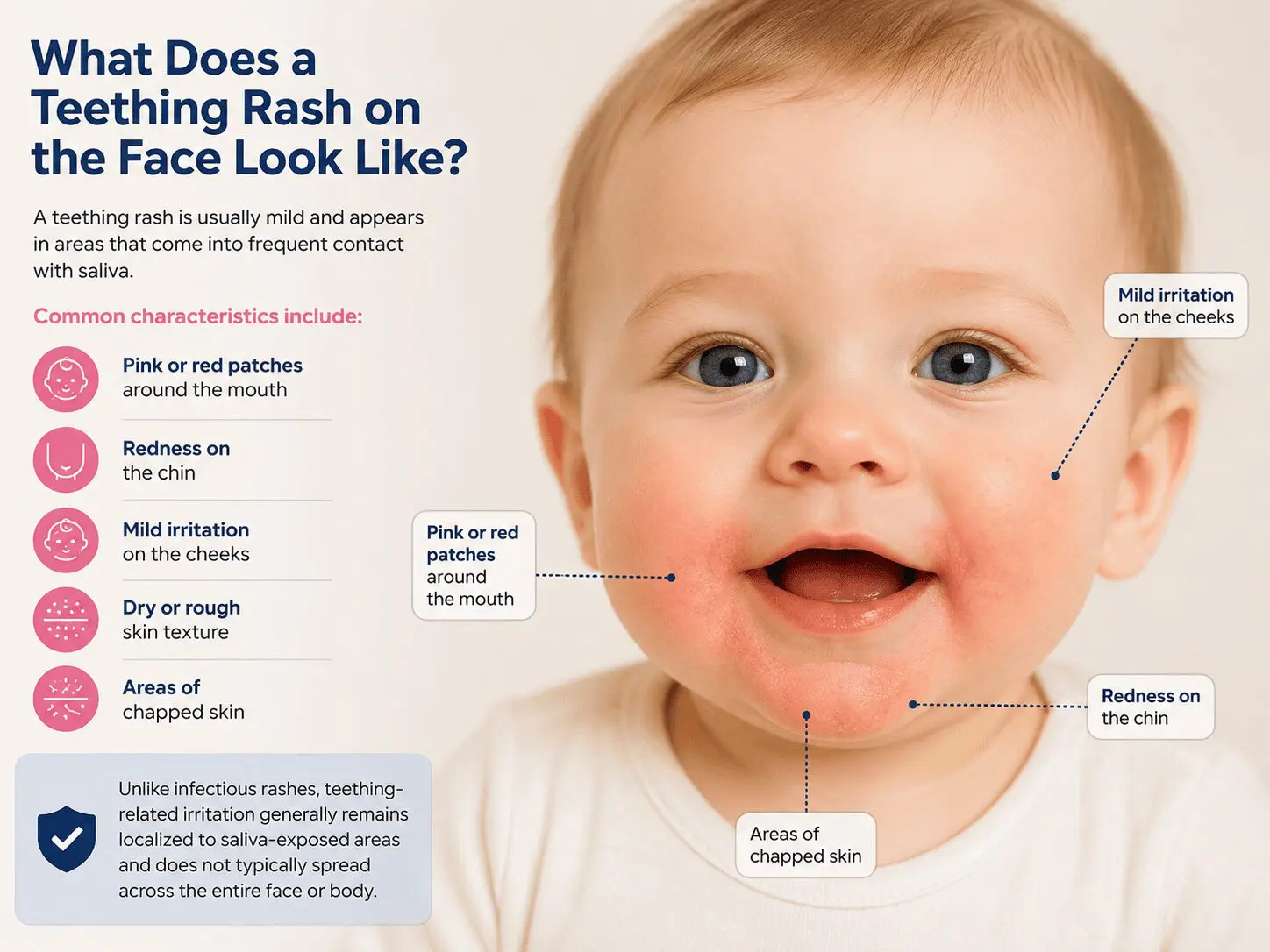
What Does a Teething Rash on the Face Look Like?
A teething rash is usually mild and appears in areas that come into frequent contact with saliva.
Common characteristics include:
- Pink or red patches around the mouth
- Redness on the chin
- Mild irritation on the cheeks
- Dry or rough skin texture
- Areas of chapped skin
Unlike infectious rashes, teething-related irritation generally remains localized to saliva-exposed areas and does not typically spread across the entire face or body.
When Symptoms May Be Unrelated to Teething
Although teething can cause certain changes, some health concerns may have causes unrelated to emerging teeth.
These include:
- High fever
- Severe diarrhea
- Persistent vomiting
- Widespread rash
- Significant lethargy
- Refusal to eat or drink
- Ongoing loose stools that cause dehydration
If these concerns occur, particularly when they are severe, persistent, or worsening, a pediatrician should evaluate the child to determine whether another illness may be present.
How To Help Soothe Red Cheeks During Teething
When facial redness appears to be related to drooling or mild skin irritation, a few simple measures may help protect the skin:
- Gently pat away excess drool throughout the day
- Keep the skin around the mouth and cheeks clean and dry
- Apply a baby-safe barrier ointment recommended by your pediatrician
- Change wet bibs frequently to reduce prolonged moisture exposure
- Monitor the area for worsening redness, swelling, or signs of infection
As baby teeth emerge and oral development progresses, understanding what changes are expected can help parents make informed decisions about their child’s dental care.
A Closer Look at Your Child’s Growing Smile
At Akoya Pediatric Dentistry, Dr. Joanna Theodorou, DMD, and Dr. Chau McGovern, DDS, provide personalized, gentle care designed specifically for children.
Whether you have concerns about red cheeks, tooth eruption, oral habits, or overall dental development, we take the time to provide guidance in a welcoming environment. Our team carefully monitors developing smiles and helps parents understand what changes are considered part of normal growth and development.
From the first dental visit through every stage of growth, our goal is to create positive experiences while supporting healthy oral development.
Pediatric Dental Care in Southwest Ranches, FL
To book a dental exam at our pediatric dental office in Southwest Ranches, FL, call (954) 799-6212 or visit us at 15761 Sheridan St Suite A, Southwest Ranches, FL 33331.
FAQs
At what age do baby teeth usually start erupting?
Most babies begin developing their first baby teeth between 6 and 10 months of age, although normal timing can vary considerably from child to child.
Can a teething ring help reduce teething discomfort?
Yes. A chilled teething ring may help soothe sore gums by providing gentle pressure and cooling relief. Frozen teething rings should generally be avoided because they may be too hard for developing gums.
Does every baby develop red cheeks while teething?
No. Some children experience flushed cheeks or mild facial redness, while others show few or no visible facial changes during tooth eruption.
When should my child have their first dental visit?
A child’s first dental visit is typically recommended by age one or within six months of the first tooth erupting. Early visits allow a pediatric dentist to monitor tooth eruption, discuss oral hygiene, identify potential concerns, and provide guidance for healthy dental development.